
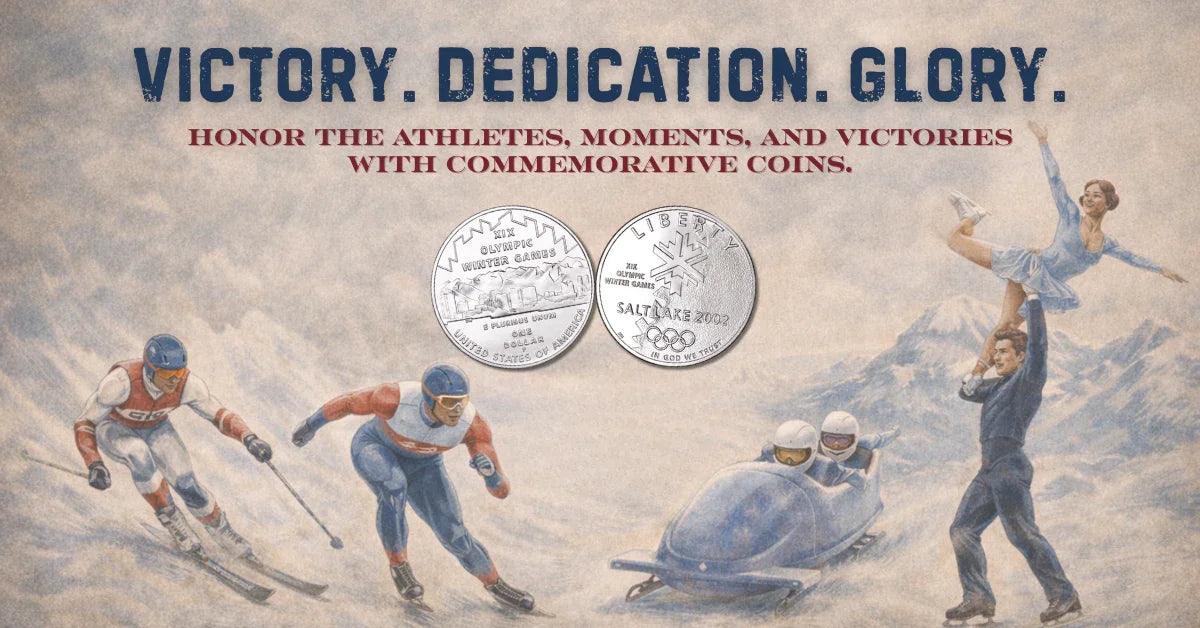
For generations, international athletic competition has represented dedication, discipline, and the pursuit of excellence. The United States Mint has captured those ideals through commemorative coin programs that reflect both historic moments and the athletic traditions celebrated around the world.
Rather than serving as souvenirs, these coins were authorized by Congress to support host efforts, recognize achievement, and preserve cultural moments in precious metal—making them enduring artifacts of modern American numismatics.
The Birth of Modern U.S. Olympic Coinage
1983–1984 Los Angeles Summer Games
1983 Discus Thrower Silver Dollar
Issued in anticipation of the Los Angeles Games, the Discus Thrower Silver Dollar draws from the ancient roots of competitive athletics. The discus event, originating in classical antiquity, represents balance, strength, and disciplined training.
During the 1984 Games themselves, track and field reached historic heights. Carl Lewis, whose four gold medals made him the defining athlete of the Games, came to symbolize modern athletic dominance. While not depicted on the coin, his performances mirrored the classical ideals represented in the discus imagery—linking the ancient origins of sport with contemporary achievement.
 
|
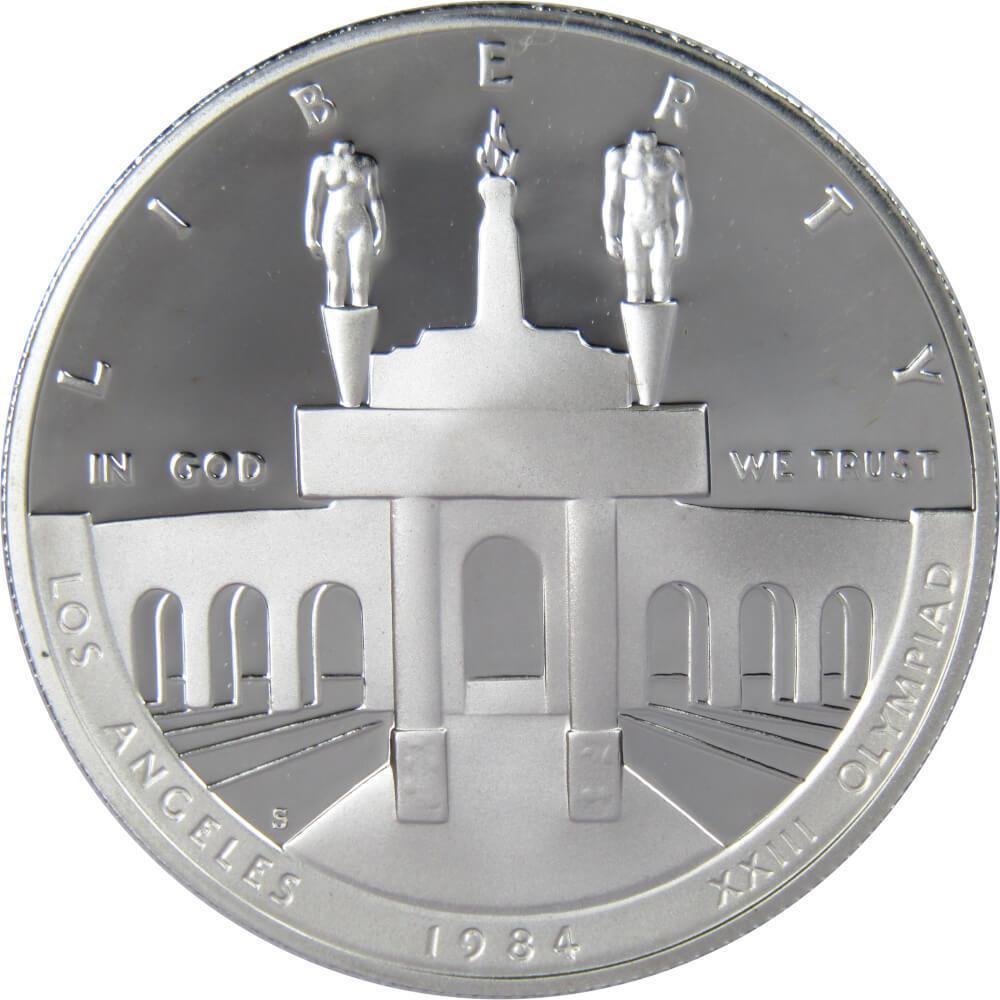
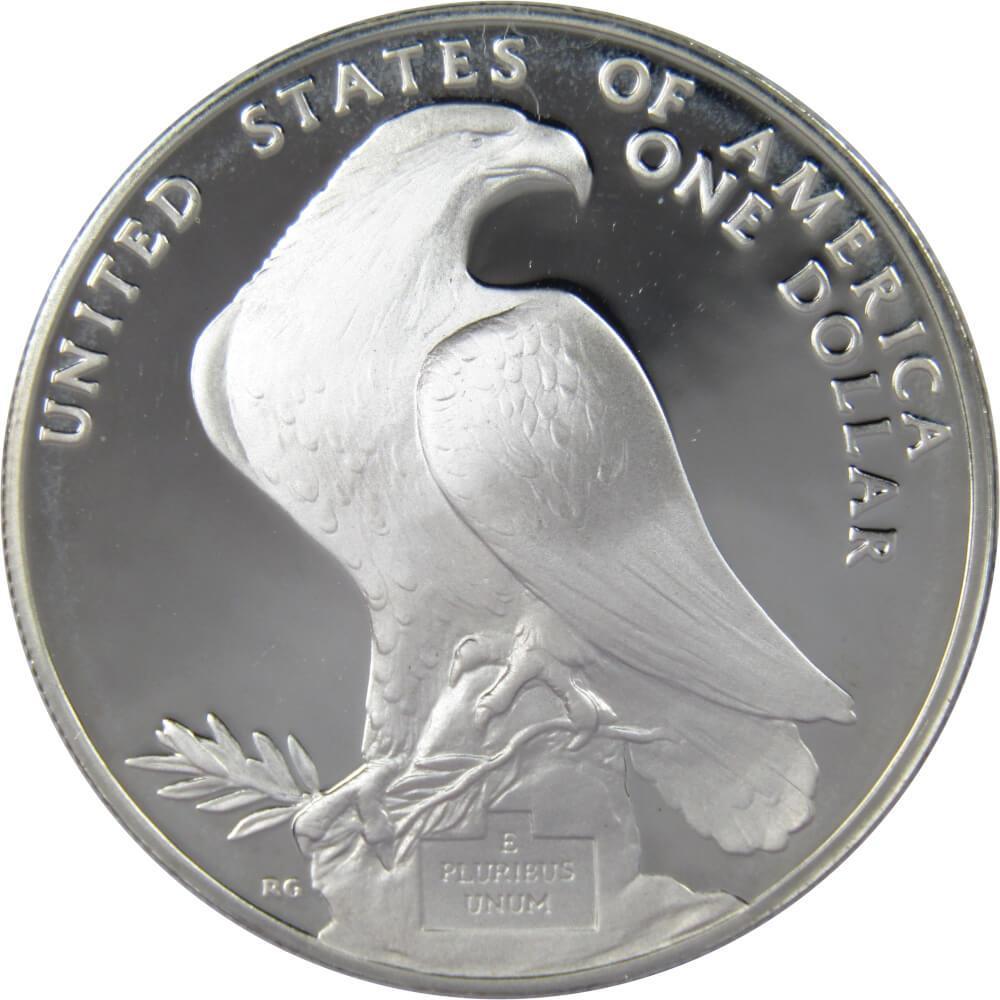
1984 Coliseum Silver Dollar
The 1984 Coliseum Silver Dollar honors the Los Angeles Games as a whole, emphasizing unity and the collective nature of international sport. Among the many unforgettable competitions of 1984, gymnastics emerged as a centerpiece.
Mary Lou Retton made history that year by becoming the first American woman to win the all‑around gold medal in gymnastics. Her achievement elevated the sport’s profile nationwide and helped define the legacy of the Games—a legacy reflected in the commemorative issued to mark the moment.
|
1984 $10 Gold Olympic Coins
Continuity and Symbolism
1988 Seoul Summer Olympics
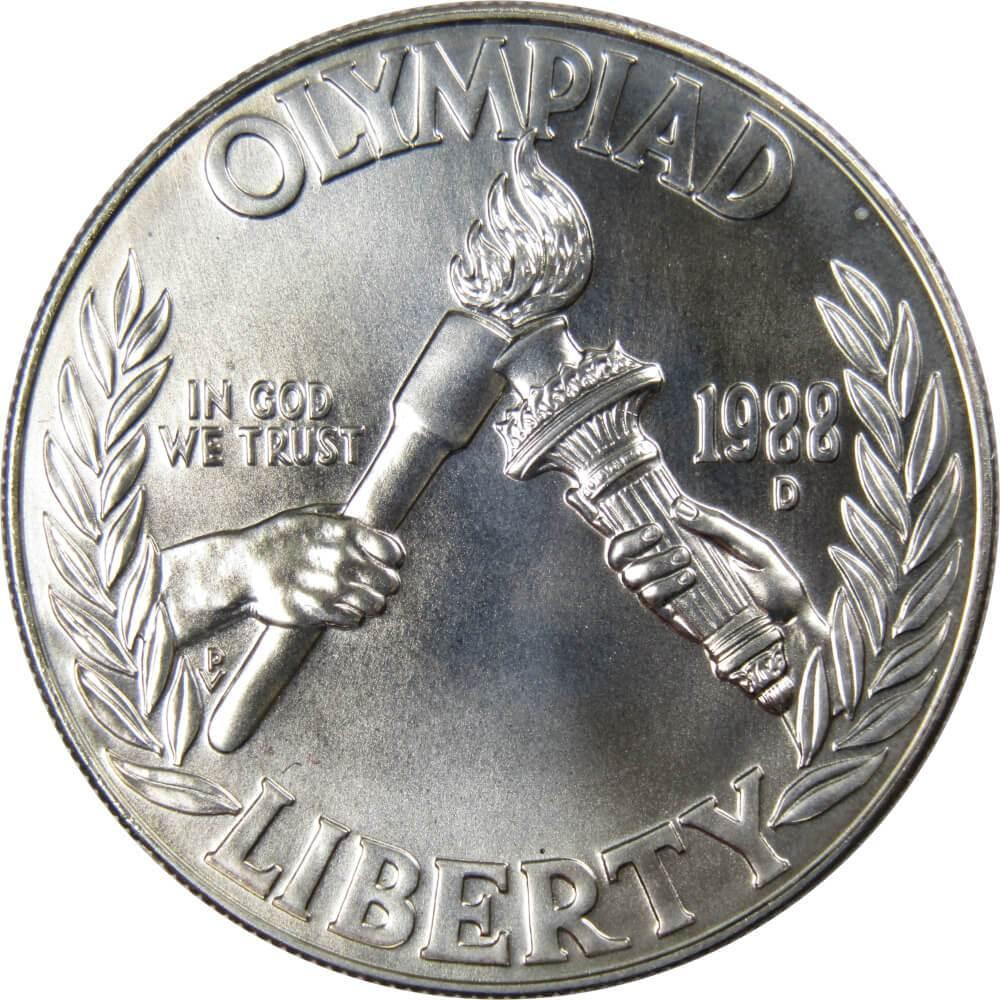
1988 Olympic Commemorative Silver Dollar
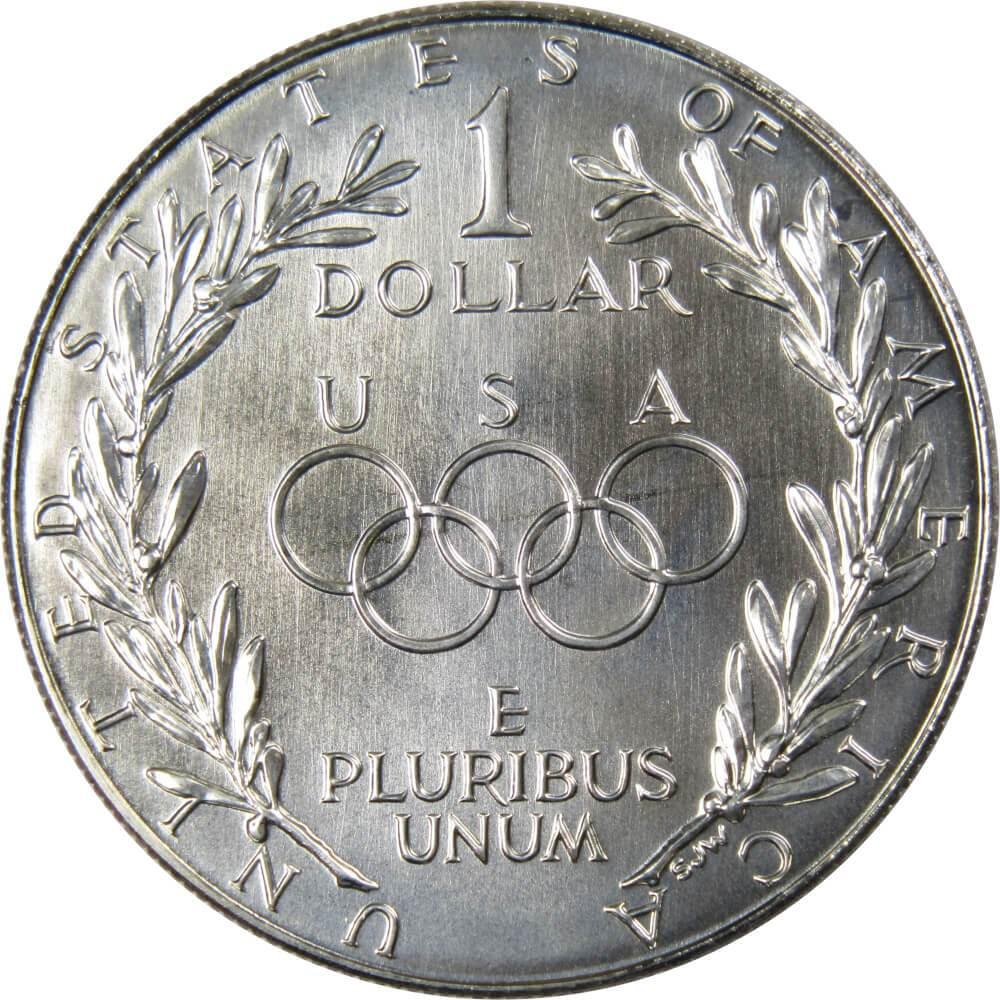
Struck to commemorate the 1988 Seoul Olympiad, this silver dollar features a powerful image of continuity and democratic ideals: a hand holding the Olympic torch being lit by the torch of the Statue of Liberty, with two olive branches on the reverse symbolizing peace and unity.
Rather than highlighting a single discipline, this design represents the Olympic tradition itself—passed from generation to generation through athletic excellence. At Seoul, track and field took center stage, led by Florence Griffith Joyner, whose record‑setting performances in the 100‑ and 200‑meter races redefined women’s sprinting. Her dominance, style, and speed made her one of the most unforgettable figures of the Games, embodying the pinnacle of global athletic performance symbolized by the Olympic flame.
|
A Global Era Emerges
The 1992 Barcelona Summer Games
1992 Olympic Silver Dollar - Baseball
This silver dollar commemorates baseball’s debut as an official Olympic medal sport in 1992—an important milestone in the game’s international growth.
During this period, Hideo Nomo became a symbol of baseball’s expanding global influence. While Olympic rosters at the time were limited, the inclusion of baseball itself reflected the sport’s growing international stature, which this coin preserves in numismatic form.
  |
1992 Olympic Half Dollar - Gymnastics
The gymnastics half dollar depicts the iron cross, a position requiring extraordinary strength and control. Gymnastics was among the most celebrated sports of the Barcelona Games, showcasing technical precision at the highest level.
Vitali Scherbo dominated the competition, earning multiple gold medals and establishing one of the most remarkable Olympic gymnastics performances in history—mirroring the power and discipline depicted in the coin’s design.
 
|
1992 Olympic $5 Gold Coin - Track and Field
Track and field, a cornerstone of athletic competition since antiquity, is honored on this gold coin featuring a sprinter in full stride against a backdrop of national symbolism.
At Barcelona, Michael Johnson captured gold in the 200 meters, signaling the start of a career that would redefine speed and form in modern athletics.
 
|
A Centennial Celebration
The 1996 Atlanta Olympic Games
1995–1996 Olympic Half Dollar Coins
These half dollars reflect a moment when American sports and global competition converged. The era was defined by increased international participation and widely recognized athletic leadership.
- Basketball reached unprecedented global prominence, led by figures such as Michael Jordan, whose influence extended far beyond national borders.
- Baseball’s continued global evolution was symbolized by internationally recognized players of the era.
- Swimming maintained a legacy of American excellence, highlighted by the endurance and precision of Janet Evans.
- Soccer gained significant momentum in the United States, with Mia Hamm emerging as a leader who elevated the women’s game on the world stage.
 
|
1995–1996 Olympic $5 Gold Coins
These gold coins emphasize universal Olympic symbols rather than individual events:
- The Cauldron, representing continuity and ceremony—made especially memorable when Muhammad Ali lit the flame at the Atlanta opening ceremony.
- The Stadium, the grand stage of global achievement, where athletes like Michael Johnson produced historic performances.
- The Torch Runner, symbolizing the relay of ideals across generations.

|
 |
 |
A Modern Winter Chapter
2002 Salt Lake City Winter Games
The Salt Lake City Games introduced contemporary styling to U.S. Olympic commemorative coins, emphasizing motion, technique, and winter athletic disciplines.
2002 Olympic Silver Dollar
Coins issued for the 2002 Winter Olympics highlight the speed, motion, and technical skill of winter disciplines. Skating events, with their combination of precision and explosive movement, were central to the Games.
Apolo Ohno, a leader in short‑track speed skating, emerged as the defining U.S. athlete of Salt Lake City. His medal‑winning performances brought widespread recognition to the sport and cemented his place among America’s most influential Winter Olympians.
 
|
2002 Olympic $5 Gold Coin
The 2002 Olympic Gold $5 Coin elevates the symbolism of the Winter Games, focusing not on a single discipline but on the spirit, ceremony, and legacy of Olympic competition. Featuring imagery associated with the Olympic flame and the identity of the host city, this premium commemorative reflects the unity of nations and the perseverance required of winter athletes.
  |
Looking Ahead: The Next Chapter of Winter Competition
As collectors look back on decades of U.S. Olympic commemorative coins, the story of international athletic achievement continues to unfold. The upcoming 2026 Winter Games in Milan and Cortina d’Ampezzo will mark the return of the Winter Olympics to Italy, a country with a long tradition of hosting historic sporting events and celebrating alpine competition.
Winter Games have often inspired some of the most visually striking Olympic coin designs, drawing from themes of motion, endurance, and technical precision. Past winter commemoratives—from skating to mountain disciplines—have reflected not only athletic performance, but the environments and traditions unique to each host region.
For collectors, upcoming Games serve as a reminder that Olympic coinage is both retrospective and forward‑looking. Each new Olympiad builds on the legacy preserved in earlier commemoratives, extending a tradition that captures athletic milestones in silver and gold for future generations to appreciate.
Why Olympic Commemorative Coins Endure
Collectors are drawn to these coins for the way they combine multiple interests:
- Sports history captured in metal
- National participation within a global tradition
- Artistic designs ranging from classical to modern
- Limited mintages that enhance long‑term appeal
- Athletes whose performances defined their eras